Artificial intelligence is making its way into so many areas.
A report from the BBC makes very interesting reading.
Thanks to Gertrūda Valasevičiūtė on Unsplash for the futuristic image.

Red and near infrared lights – can they help degenerative neurological diseases?
Artificial intelligence is making its way into so many areas.
A report from the BBC makes very interesting reading.
Thanks to Gertrūda Valasevičiūtė on Unsplash for the futuristic image.
I had an interesting query today regarding the penetration of red and near infrared light into the body.
Question:
Does the penetration of red and near infrared light increase as the wavelength increases?
Answer:
Alas, no. The human body isn’t going to make life that easy for us!
Penetration studies have shown that 810 nanometres (written as 810nm) has the best ability to penetrate through the skin and into the body tissues.
There are some wavelengths in the red and near infrared spectrum that hardly penetrate at all, while others are better. 810nm is the best.
810nm is in the near infrared range. Because it is at the very edge of our ability to see, an 810nm light looks very pale.
Visible red 670nm is pretty good, but not as good as 810nm. However, when the 670nm wavelength reaches the cell, it is highly efficient at getting the cell batteries (mitochondria) to recharge and kickstart the cell.
Thanks To Steve Harvey on Unsplash for the great photo from Nottingham.
The New Scientist published an article a few weeks ago called How to keep your brain blooming. It’s written by by James Goodwin, someone who knows a lot about brains.
Continue reading “Blooming brain”The New Yorker has reviewed a non-fiction book written by the author of Still Alice.
Here’s the link.
It is a really interesting article, and definitely worth a read.
This is for Kevin in New Zealand who left a message a few days ago. Unfortunately your email addressed bounced when I tried to send a response.
Can you email me on redlightsonthebrain@gmail.com?
I’ve had a query about LED strips and individual LED lights. Both have their place.
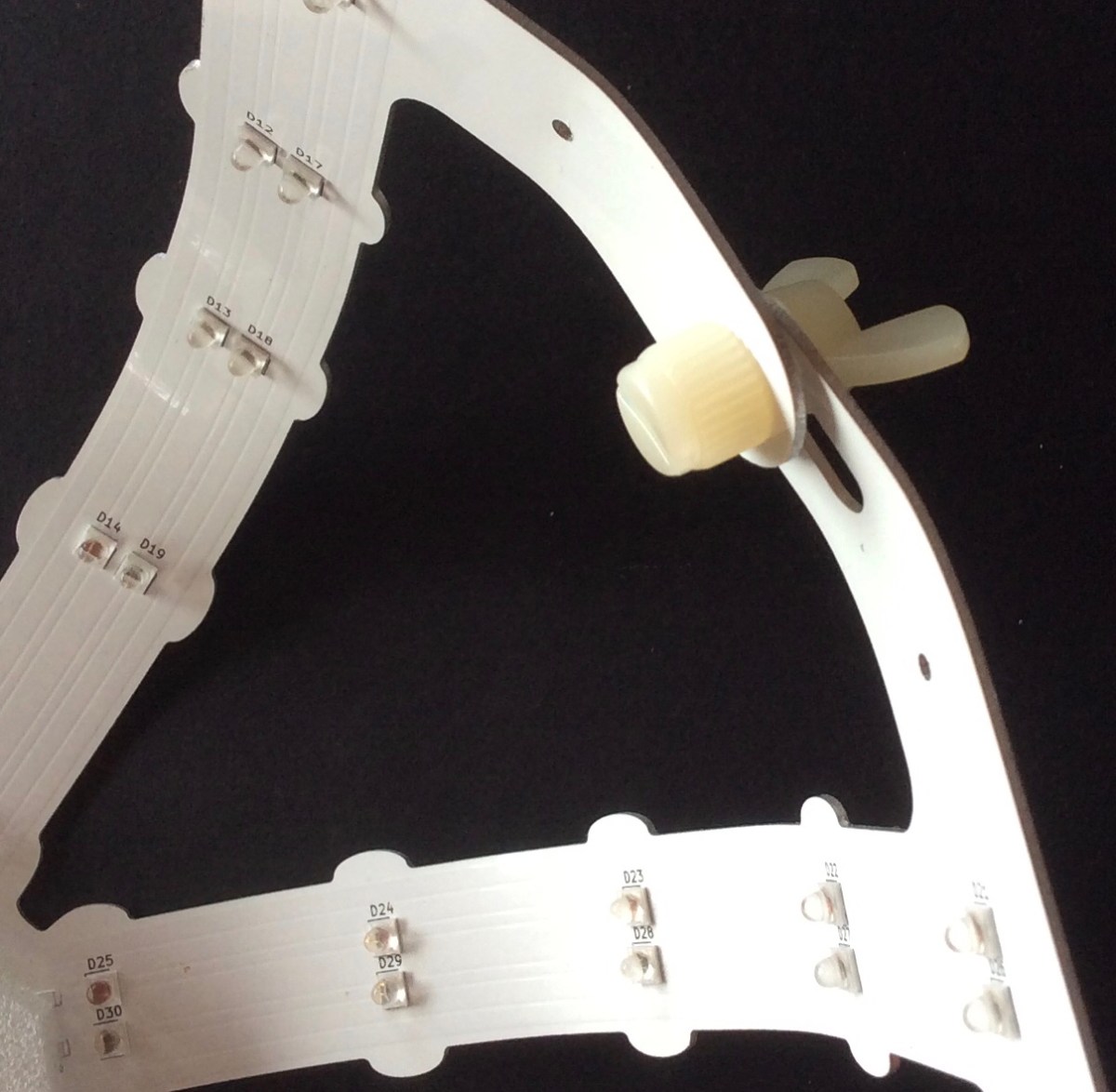
If you are thinking of investing hundreds of dollars into a commercial transcranial red and near infrared light device, make sure that you select a device made with individual LED lights.
Continue reading “LED strips vs individual LEDs”

 Red lights on the brain