Expectations

I’ve been answering a lot of emails from people who have recently read about the red/near infrared lights and Parkinson’s disease.

The stories have given hope, and justifiably so, as the case reports have shown that red and near infrared light can help PD symptoms.

But expectations must match the reality of red and near increased lights.

Red and near infrared light will NOT cure Parkinson’s disease.

Red lights will not magically return people to their previously healthy selves.

Red lights will not take the place of PD medication.

Red lights will not create immediate improvements.

In different people, depending on the degree of the disease and their general health, the lights will have variable effects. These effects occur slowly and subtly over time.

Any improvements, however small are worth having, but they do not occur speedily nor dramatically.

I would ask that you temper your expectations.

Maintain hope, but do not expect miracles for you will be disappointed.
Comfort is paramount – the Not List

I’ve been contemplating the DIY red light hats I’ve seen. Some are brilliant, made with artistry and an aesthetic balance that is breathtaking. Some are, um, not so magnificent to behold. Does appearance matter? Not really.

It is not the beauty, it is the function.

If the DIY light hat is heavy, hot, oppressive or worse, covers the face, it is not going to be comfortable to wear, no matter how elegant it looks.

If it is a physical burden to wear the light hat, then it is unreasonable to expect anyone to take on such a daily commitment of misery.

Comfort is the key to any DIY light device.

Here is the List of Nots:

  • Not heavy
  • Not hot
  • Not oppressive
  • Not covering the face
  • Not difficult to balance on the head
  • Not physically awkward or painful to wear for 20-odd minutes at a time

The User of the device must always have the final say.

If the User finds the light hat distressing or uncomfortable wear, the User can and should refuse to use it.

The User’s opinion is final.

Will red lights “fry my brain”?

I know that this term has been recently used in conjunction with red lights which is a pity. While it might make a thrilling moment on television, it gives a very inaccurate and misleading picture of how red lights work.

Even worse, it raises unnecessary fears.

The answer: red lights won’t fry your brains.

If you follow the guidance given in this blog, you’ll notice that there is occasional mention of heat, because some LED strips can get warm. And anything warm on your head can be uncomfortable.

This is easily avoided by making yourself a light hat that is open and not closed in – the Cossack is the best DIY design.

Article on Alzheimer’s disease

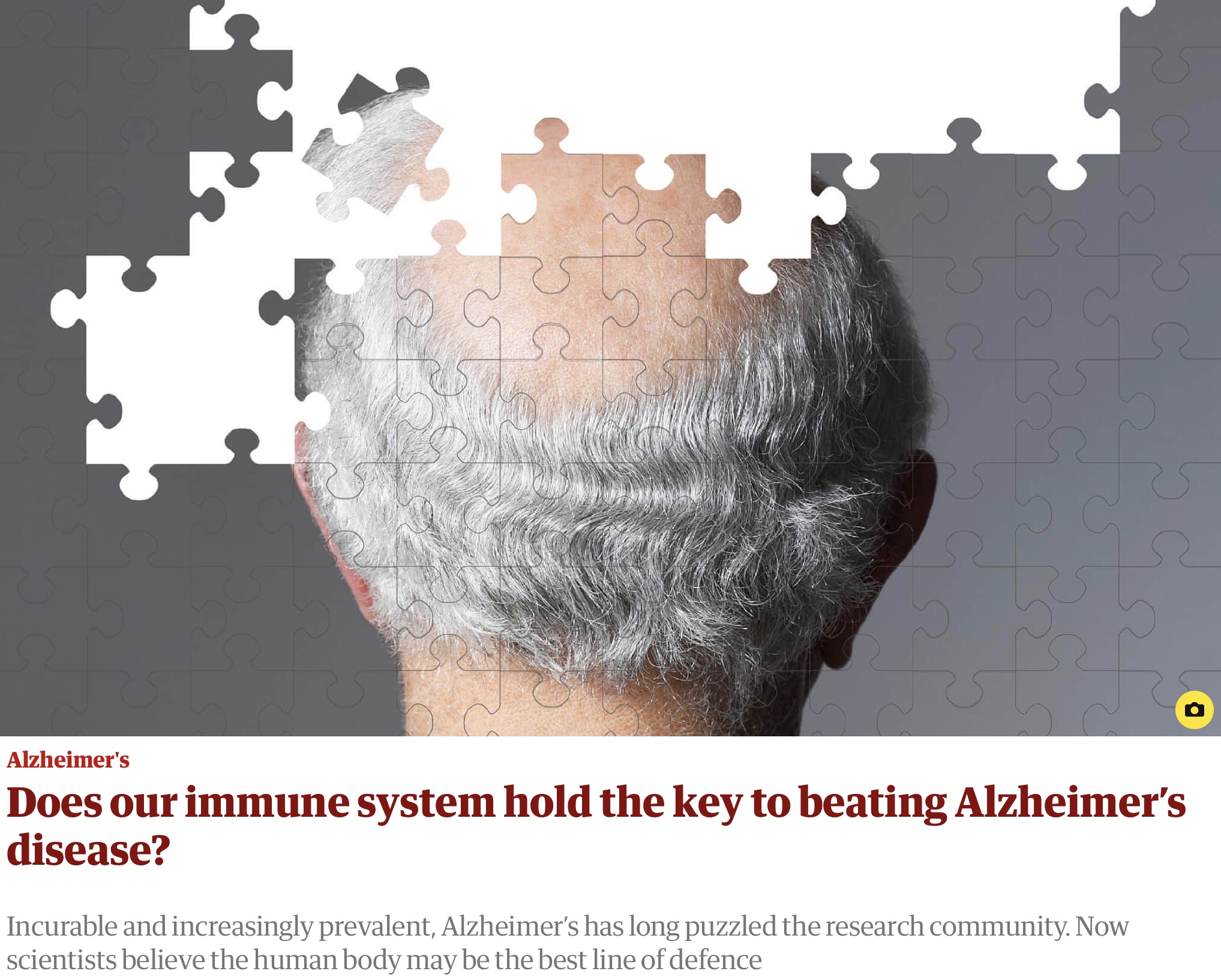
Philip Ball’s article in The Guardian is terrific.

It explains many complex aspects very clearly, especially amyloid and tau proteins and the history of different approaches to drug development.

Read to the end, where he mentions the possible link between Alzheimer’s and the bacteria that cause gum disease.

Seems like we should embrace teeth-cleaning with far more enthusiasm and hope.

It won’t hurt.

What wavelength is best for my condition?

If you have looked at the availability of rolls of red and near infrared LED lights, you will see that there is a bewildering array, between orangey-red (630nm) to out of the visible spectrum so that you can’t see it at all (940nm).

So what, you ask. Surely it doesn’t matter? Surely red light, near infrared light – it’s all the same? One wavelength is as good as another?

Wavelength matters – please be cautious!

I’ve been corresponding with lots of people over the last week. In my response, I always ask whether the query is for uncomplicated Parkinson’s disease, or for PD complicated by another neurodegenerative process. I’m not asking because I’m being nosey – the question is really important.

Continue reading “What wavelength is best for my condition?”

Pulsed vs continuous light

I’ve had a number of queries about pulsed light.

There is good evidence now that pulsed light is more effective than continuous light. Maybe the cell batteries, the mitochondria like to have a little pause in between receiving a pulse of light energy and directing it into the cell as metabolic energy. It makes sense.

The other reason is that by pulsing the light, the light dose is then the average of the pulse-ON and pulse-OFF. This means you can push the power in the pulse-ON, knowing that it will be offset by the no-pulse time.

I know of several people who have gone on to pulse their LED-based Elizas and Cossacks, and I have nothing but total admiration and envy for them, but there is no way I could do that.

The reasons that I have not previously mentioned the value of pulsed light is because;

1. I couldn’t give instructions to achieve it

2. I didn’t want anyone to devalue the effectiveness of continuous red/near infrared light.

Daily unpulsed red light better than no red light.

If you are using your Eliza or Cossack with continuous red/infrared light, do not be tempted to chuck it in the corner and refuse to use it because it won’t pulse. It is still doing its very best for you, and that is a lot better than nothing.