Hot off the press…

Transcranial red light can improve Parkinson’s disease symptoms. This article calls for increased recognition of the huge potential of Photobiomodulation as a safe, home-based therapy in neurodegenerative diseases.

The article Exploring the use of transcranial photobiomodulation in Parkinson’s disease patients has just been published in the journal Neural Regeneration Research.

It is based on the work of Dr Frank Nicklason, Dr Catherine Hamilton, Prof John Mitrofanis, Nabil el Massri and David Hamilton.

This article provides a strong argument for faster action in clinical trials. The improvements being experienced and documented by daily light hat users provide convincing and exciting evidence that red lights on the brain do something good. Continue reading “Hot off the press…”

“To sleep, perchance to dream”

Trans-cranial red light can improve REM or dream sleep disruption in people with Parkinson’s Disease.

For spouses of people with Parkinson’s, the above quote can be a threat.

We have a protective mechanism that stops the body moving during dream or REM sleep. So while you are dreaming about running away from an enraged grizzly bear, your body is still.

One of the many awful things about Parkinson’s is that can disrupt this protective mechanism during dream sleep. This means that when the grizzly bear is chasing, your body is no longer still. You are running as fast as you can while lying in bed.

If your spouse is lying next to you, it is like war has broken out. Your frantic running from the grizzly bear results in an eruption of kicking and thrashing. You are fast asleep but your spouse has had a rude awakening.

Daily light hat use can stop warfare during dream sleep.

There has been a steady increase in the number of spouses reporting that the outbreaks of war have stopped following daily use of red light. As well, the person with Parkinson’s feels that sleep is of a better quality.

Deep Brain Stimulation (DBS)

One of the reports came from a chap who had the DBS procedure. He was initially apprehensive about using an Eliza because of his DBS, but there is no good scientific reason to suspect that there would be any adverse reaction.

His dream sleep has resumed being peaceful, and he is much happier with improved sleep. And so is his wife.

Redlightsonthebrain Forum

A few people have asked to be put into contact with others making Elizas and Daffodils at home. I’m told that a forum is just the thing to allow this to happen.

So the redlightsonthebrain forum has been set up. It is set up as a free site, so apologies in advance for any advertisements.

I’m the Admin, but I’m a novice forum-user, so anything could happen….oh well, we can only give it a try. If it is a disaster, it can be removed from existence.


Instructions for the one wavelength Eliza

I’ll be posting the instructions for the one wavelength Eliza later today. It has taken me a lot more time than expected to put in all the details.

You will need a workplace with good light and electricity. You will also need patience and a sense of humour.

In preparation, here is the list of things you will need.

The ideal bucket for your Eliza

  • Plastic – not too thin as these can split when you cut them.
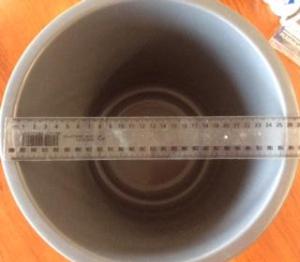
  • Internal diameter at the top around 260mm (~10.5 inches). Definitely no less than 240mm (~9.5 inches) and no more than 300mm (~12inches).
    Bucket diameter
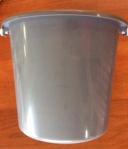
  • Straight sides. Well, straight-ish sidesBucket straight sides
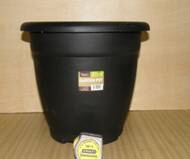
  • Depth of around 190mm (~7.5 inches). If you can find one of that depth, then you are saved a lot of cutting and fiddling. If you can only find buckets that are much deeper than that, like the one in the pic above, then brace yourself for some cutting and fiddling.
  • Colour of your choice. If it is close to Christmas, red could be nice.