“The wrinkling of time”

Isn’t that a fabulous phrase?

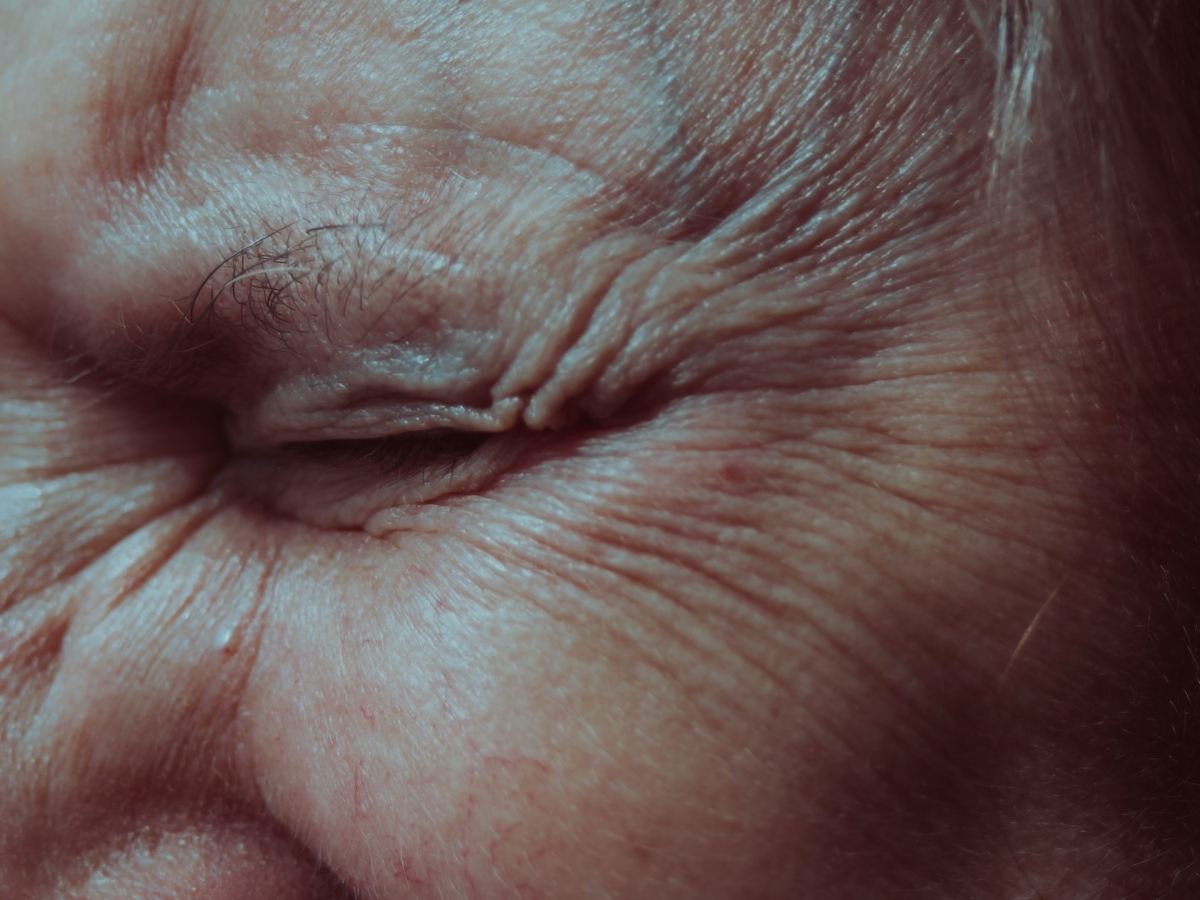
It comes from a 2020 journal article called The wrinkling of time: Ageing, inflammation, oxidative stress, and the circadian clock in neurodegeneration.

The article discusses the impact of ageing on the circadian rhythm. Having a healthy circadian rhythm ensures that our body functions properly over the 24 hour daily cycle. If the circadian rhythm goes awry, then the mind and body also are metaphorically wobbly. Sleep is badly affected, the immune system goes haywire leading to increased inflammation in the body and brain. Life is made more difficult and the risk of dementia increases.

Continue reading ““The wrinkling of time””

The Hand Test

Some say that a red light source must be able to shine from one side of your hand to the other otherwise it won’t have the grunt to penetrate through the skull and into the brain tissue.

For amusement, we put that to the test. We took one of the individual 670nm LEDs used in the Well Red Coronet* and tested it out.

For the detailed results, click here. Spoiler alert: It worked magnificently.

So what about the red lights in LED strips that we use in Cossacks?

Cossack light hat. Click on the DIY menu item for instructions.

I’ve been testing out a strip of 670nm LED strip. I masked the lights on the LED strip and only left 4 little LED lights shining. In the dark, they looked pretty bright, but when I put my hand over them, I couldn’t see any red light coming through. So I can say categorically that 4 little LEDs on a red LED strip don’t pass the Hand Test.

However, in the Cossack we use a full 5 metre LED strip just around the outside of the frame, so that’s an awful lot of individual LEDs shining onto your head. It is very possible that the light from a clump of LEDs from LED strips will penetrate through the hand.

I’d suggest, though, that you don’t worry about this concept, and just get cracking on making your Cossack. It may be home-made, but I’ve had consistent positive feedback from Cossack-wearers all over the world.

Cossacks can and do help. As long as they are worn, of course!

* For interest, there are 40 of these LEDs in the Coronet.

Before or after food?

When is the best time to use your Duo Coronet or Cossack?

I’ve been lucky enough to read an article that will soon be published in the journal Neural Regenerative Research.

The article is called Does Photobiomodulation require glucose to work effectively?

Good question. Would it make a difference using red and near infrared lights before, with or after a meal?

The article is by Jaimie Hoh Kam and Prof John Mitrofanis. Prof John, one of the leading international researchers into photobiomodulation, has been mentioned a lot in this blog as he has led significant original work on photobiomodulation and especially its relationship to Parkinson’s disease. Here’s a link to blog posts covering his work.

Glucose is the product that the body uses to fuel the activities of all the cells in the body. Glucose comes from our diet – our body breaks down what we eat into its molecular components, a key one being glucose. Glucose is also available from glycogen, which is stored in the body and is able to release of glucose directly into the bloodstream. Our cells need a constant supply of glucose, so the system to maintain it in the bloodstream is pretty complicated.

Glucose enters the cells, and interacts with oxygen, stimulating the mitochondria to produce the perfect cell fuel, ATP.

Glucose + Oxygen + a mitochondrial enzyme make cell fuel.

If a cell has ATP at the ready, it can do whatever it is meant to do with gusto and enthusiasm. If there is little ATP, then the mitochondria – and thus the cell – aren’t at all happy.

When there is a problem with the mitochondria in our cells, they have difficulty taking up and using glucose, so the cell is unable to function as it should. To add to the woes, the miserable mitochondria start churning out chemicals that are harmful, including a range of pro-oxidants like superoxide and hydrogen peroxide. These then lead to other nasty chemical reactions that further damage cells. As this keeps going, the damage to that part of the body spreads and its function deteriorates.

Photobiomodulation, the therapeutic use of red and near infrared light, has been shown to boost the function of the mitochondria and drive the release of more ATP to fuel cell activities. Photobiomodulation also drives glucose from the bloodstream and into cells. This is obviously very useful, especially if you have diabetes.

A fascinating study on drosophila flies shows that photobiomodulation increases metabolism and also survival rate. But in fasting flies – flies with low glucose levels – photobiomodulation has little or no effect.

All this strongly indicates that photobiomodulation is best done when there is food in the stomach and plenty of glucose is pumping around in the bloodstream.

The practical advice from this paper is simple. To achieve the best effect, use your Cossack or Coronet during or straight after a meal.

Use your light device – your Duo Coronet, Cossack, TheraPad – during or just after a meal.

Thanks to Nick Fewings on Unsplash for the fabulous photo of fruit.

Cossack top / light pad instructions.

Instructions for making a detachable top for your Cossack light hat. It also can be used as a light pad, provided that you make it with gel-covered LEDS.

Further to yesterday’s post about Michael Richard’s clever addition to the Cossack light hat, we have now completed the instructions for the detachable Cossack top/light pad which you can download below.

Detachable Cossack top / light pad

The instructions for making a detachable top for your Cossack are close to being finalised.

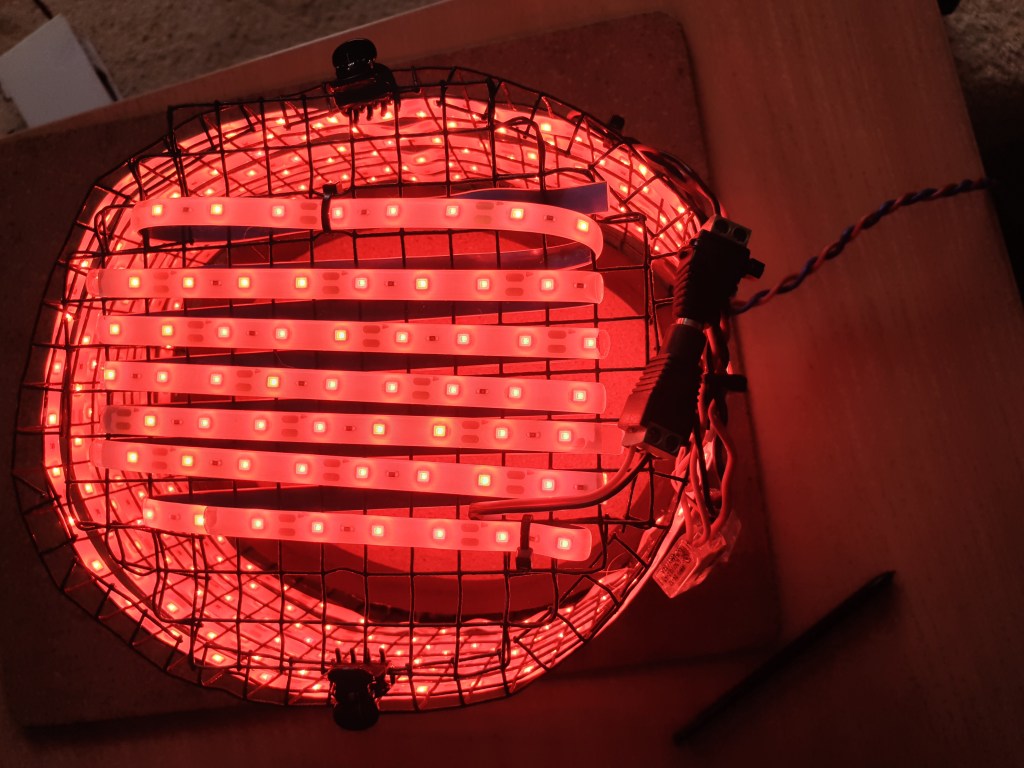
The top, as with the Cossack itself, has a frame made from plastic-coated mesh.

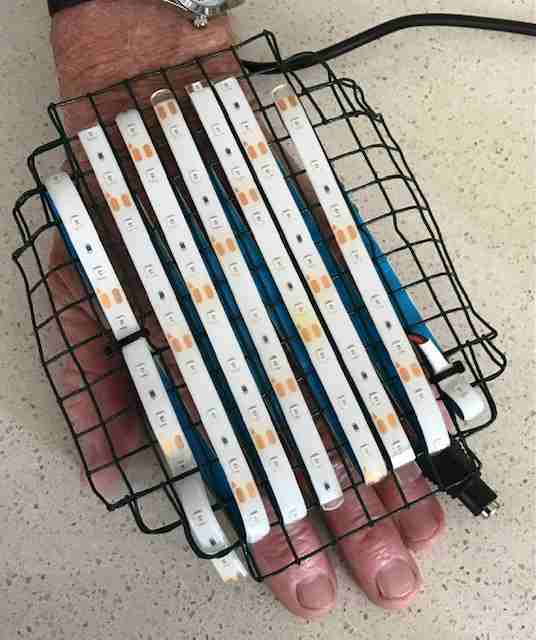
It uses gel-covered 12V DC LED strip. The gel covering is really important because it allows the top to be used directly on the skin. If you get the non-gel-covered LEDS then your skin will be scratched and the LEDs will be uncomfortably hot.

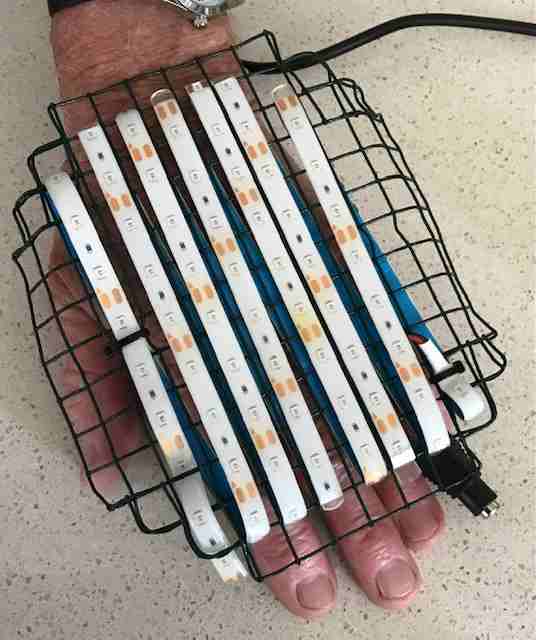
Here’s the top resting on Michael’s sore hand. Note the gel-covered LEDS.

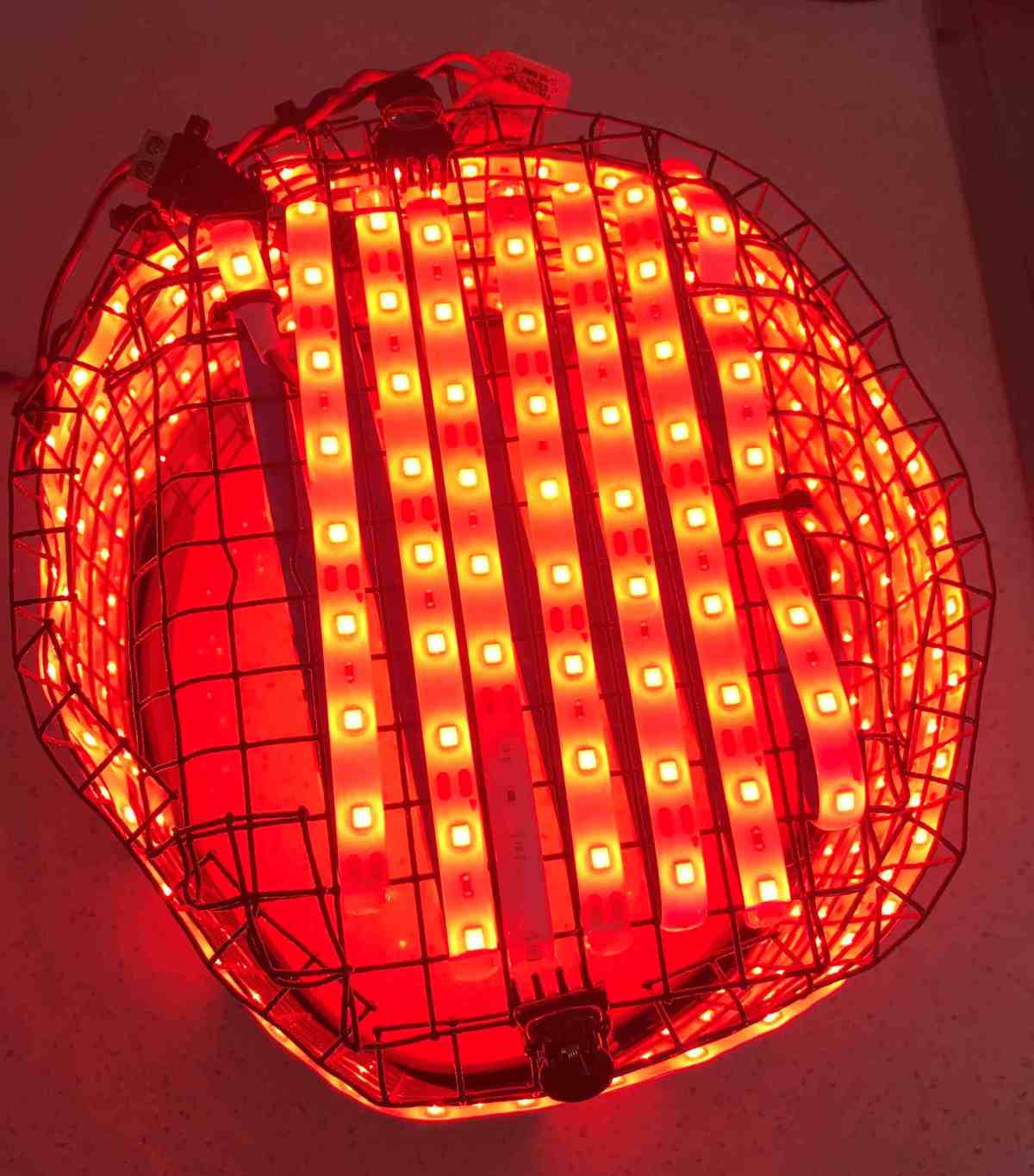
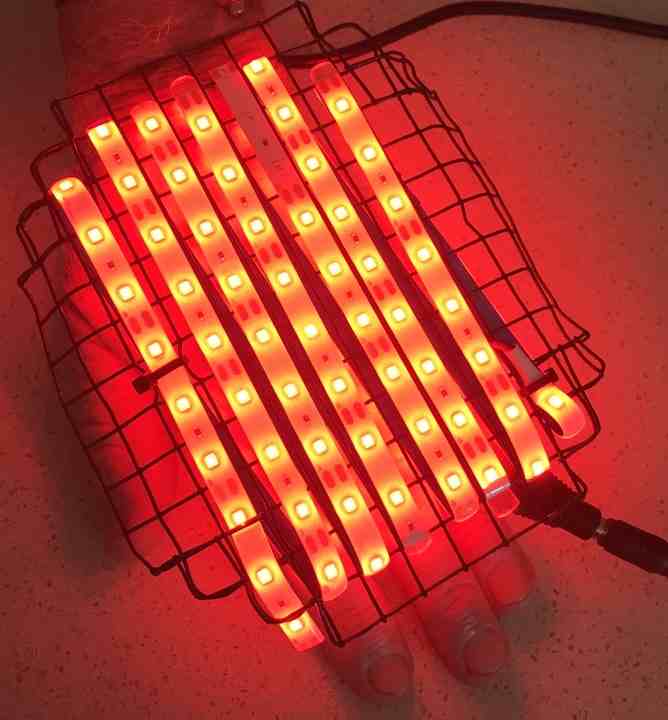
And here it is with the lights on.

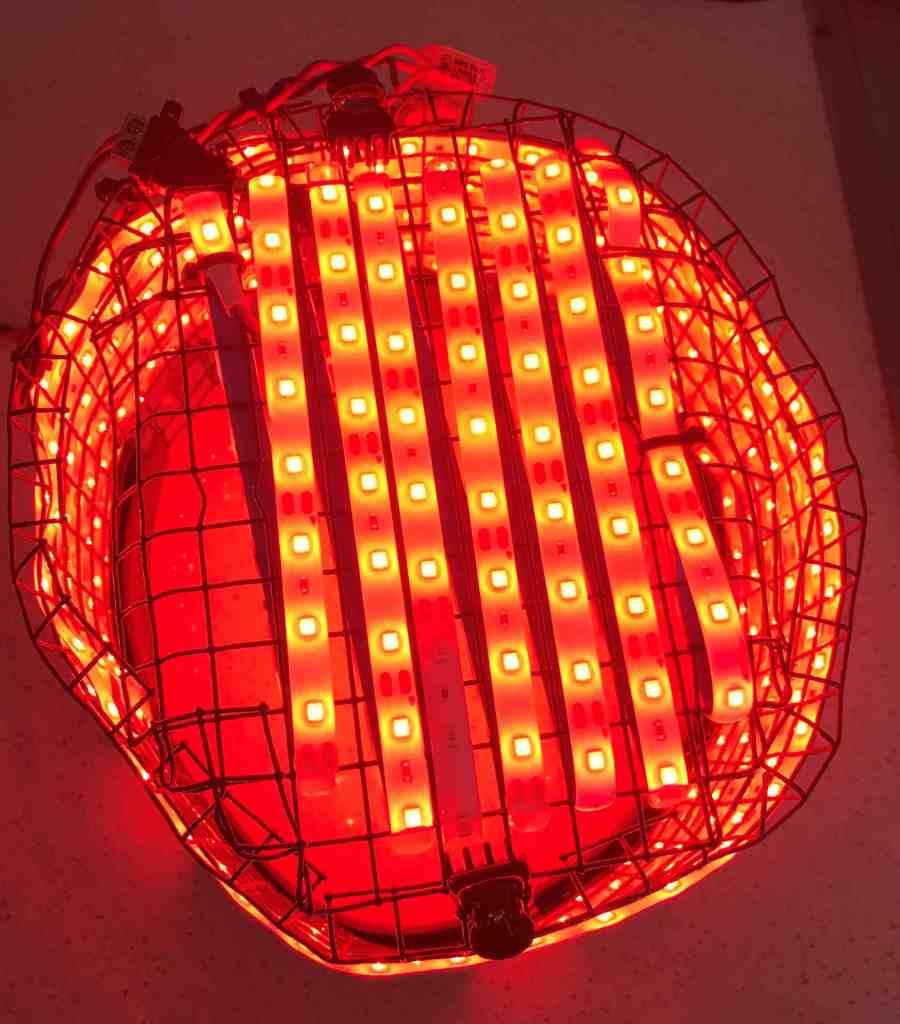
The last photo shows the Cossack and its top shining together.

I’ll be posting the detailed instructions very soon.