Protect and nurture your brain

A few days ago I wrote a blog post on the Well Red website about people with Parkinson’s disease using the Duo Coronet on a daily basis for five years now, and sharing my delight at how well they are doing. Not long after the post was published, I had an email from a Coronet-owner who confessed to no longer using his lights, because it didn’t give instant results and because it was difficult to sustain motivation.

I thought I would share my response, because it is relevant to anyone wearing any kind of transcranial light device, be it a home-made Cossack or a Duo Coronet.

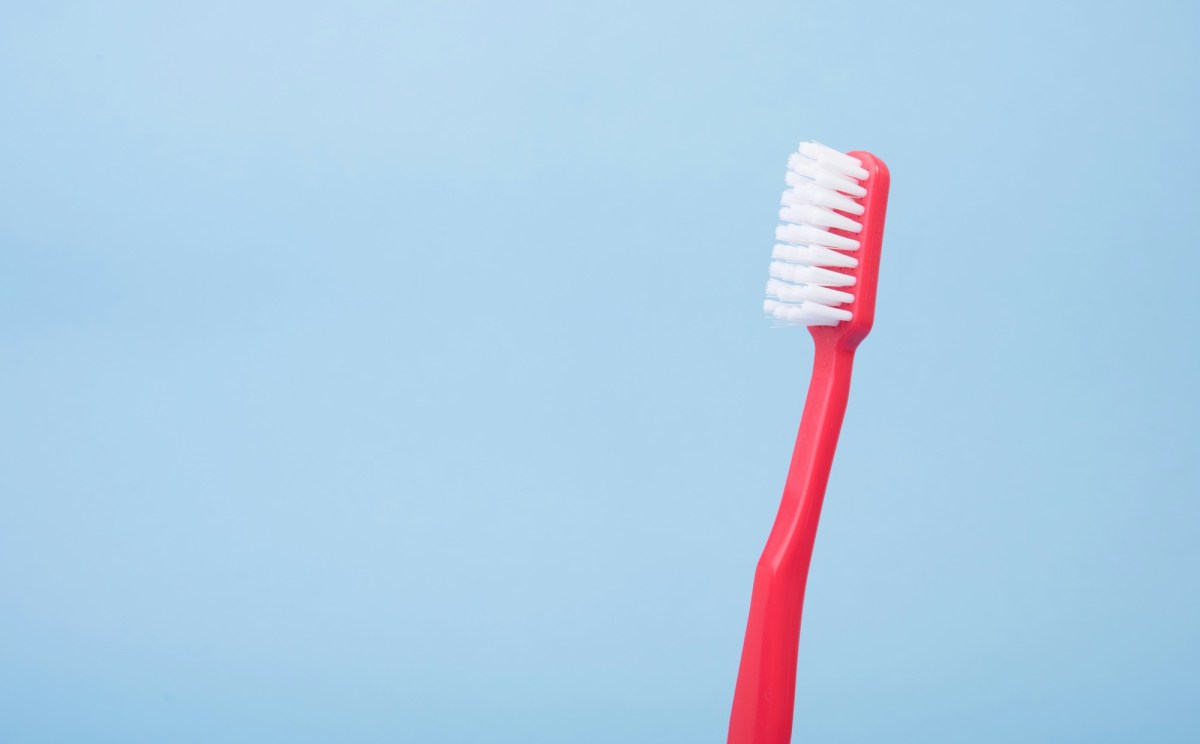
Think about why you clean your teeth every day.

You clean your teeth every day, not because you expect your smile to be suddenly transformed into full film star glory, but because you want to keep your teeth chomping on apples and chewing your favourite meal until the day you depart this world. You want your teeth to be healthy and in good working order – forever.

It’s the same with your brain. You want that part of your body to maintain the best function possible – forever.

Having red and near infrared lights shining on your head every day keeps your brain in good working order, as the Well Red blog post demonstrates. Daily light use doesn’t turn your brain into a second Einstein, nor does it instantly cure everything, but it protects your brain and slows down any degenerative process that might be lurking in the neuronal undergrowth.

Think about using your transcranial light device with or straight after breakfast, and then with or straight after your evening meal. Linking the device use with an event that is essentially concreted into your daily routine makes it easier to keep it going.

There’s another very good reason to link your light use with meals, as this increases the ability of the mitochondria to respond effectively. Check out this earlier blog post for more about the relationship between lights and food.

So if you have a light device and you’ve stopped using it for whatever reason, then go find it, dust it down, plug it in and bung it on your head right now. And keep doing that every day, preferably twice daily.

Thanks to Alex Padurariu on Unsplash for the wonderful photo of the toothbrush and to Mikael Kristenson for the arresting image of equine dentition.

“The wrinkling of time”

Isn’t that a fabulous phrase?

It comes from a 2020 journal article called The wrinkling of time: Ageing, inflammation, oxidative stress, and the circadian clock in neurodegeneration.

The article discusses the impact of ageing on the circadian rhythm. Having a healthy circadian rhythm ensures that our body functions properly over the 24 hour daily cycle. If the circadian rhythm goes awry, then the mind and body also are metaphorically wobbly. Sleep is badly affected, the immune system goes haywire leading to increased inflammation in the body and brain. Life is made more difficult and the risk of dementia increases.

Continue reading ““The wrinkling of time””

Before or after food?

When is the best time to use your Duo Coronet or Cossack?

I’ve been lucky enough to read an article that will soon be published in the journal Neural Regenerative Research.

The article is called Does Photobiomodulation require glucose to work effectively?

Good question. Would it make a difference using red and near infrared lights before, with or after a meal?

The article is by Jaimie Hoh Kam and Prof John Mitrofanis. Prof John, one of the leading international researchers into photobiomodulation, has been mentioned a lot in this blog as he has led significant original work on photobiomodulation and especially its relationship to Parkinson’s disease. Here’s a link to blog posts covering his work.

Glucose is the product that the body uses to fuel the activities of all the cells in the body. Glucose comes from our diet – our body breaks down what we eat into its molecular components, a key one being glucose. Glucose is also available from glycogen, which is stored in the body and is able to release of glucose directly into the bloodstream. Our cells need a constant supply of glucose, so the system to maintain it in the bloodstream is pretty complicated.

Glucose enters the cells, and interacts with oxygen, stimulating the mitochondria to produce the perfect cell fuel, ATP.

Glucose + Oxygen + a mitochondrial enzyme make cell fuel.

If a cell has ATP at the ready, it can do whatever it is meant to do with gusto and enthusiasm. If there is little ATP, then the mitochondria – and thus the cell – aren’t at all happy.

When there is a problem with the mitochondria in our cells, they have difficulty taking up and using glucose, so the cell is unable to function as it should. To add to the woes, the miserable mitochondria start churning out chemicals that are harmful, including a range of pro-oxidants like superoxide and hydrogen peroxide. These then lead to other nasty chemical reactions that further damage cells. As this keeps going, the damage to that part of the body spreads and its function deteriorates.

Photobiomodulation, the therapeutic use of red and near infrared light, has been shown to boost the function of the mitochondria and drive the release of more ATP to fuel cell activities. Photobiomodulation also drives glucose from the bloodstream and into cells. This is obviously very useful, especially if you have diabetes.

A fascinating study on drosophila flies shows that photobiomodulation increases metabolism and also survival rate. But in fasting flies – flies with low glucose levels – photobiomodulation has little or no effect.

All this strongly indicates that photobiomodulation is best done when there is food in the stomach and plenty of glucose is pumping around in the bloodstream.

The practical advice from this paper is simple. To achieve the best effect, use your Cossack or Coronet during or straight after a meal.

Use your light device – your Duo Coronet, Cossack, TheraPad – during or just after a meal.

Thanks to Nick Fewings on Unsplash for the fabulous photo of fruit.

Red light’s many ways of working

Don’t discount the indirect effect of red and near infrared light.

I’ve had a number of queries lately about the importance of penetration of red and near infrared light into the brain. The questions stem from an assumption that red and near lights will only be effective if they act directly onto the cell. This assumption isn’t correct. Red light doesn’t rely on just one method to be effective.

Continue reading “Red light’s many ways of working”

Wavelengths matter

A recent article compared the action of visible red 660nm with near-infrared 980nm.

The 660nm wavelength is a very lovely and rich shade of red, very much like the red velvet in Gwen’s photo of theatre curtains. In contrast, the wavelength 980nm is way out of the visible range and our eyes cannot see it at all.

This study showed that both wavelengths stimulated the cells into action through the mitochondria, the powerhouses inside cells. When the 980nm wavelength was used, it quickly stimulated the cell, but the effect died away pretty quickly.

In contrast, the visible red 660nm was slower to get going, but the effect lasted for at least 24 hours.

What does this finding mean?

Remember that mitochondria are like batteries, powering the cell to keep it healthy and active. The longer the mitochondrial batteries remain powered up, the longer the cell will function and – very importantly – the longer it will live.

Visible red 660nm, a rich colour to our eyes, is also a rich source of energy for our cells, and the energy that this wavelength generates will last for well over a day.

There has been interest in the use of longer wavelengths (900-1100nm) for light hats. This research article strongly suggests that it would be better to stick to visible red wavelengths.

Reference:

Fuchs, Christiane, Merle Sophie Schenk, Linh Pham, Lian Cui, Richard Rox Anderson, and Joshua Tam. “Photobiomodulation Response From 660 Nm Is Different and More Durable Than That From 980 Nm.” Lasers in Surgery and Medicine 53, no. 9 (November 1, 2021): 1279–93.

Thanks to Gwen King on Unsplash for the lovely image.

Transcranial lights are the way to go.

Here’s a new journal article from the Journal of Alzheimer’s Disease. I’m a co-author, but don’t let that get in the way.

This article looks at the animal and clinical evidence for the use of transcranial and intracranial red and near infrared light devices. There is a lot of detailed information, including and in-depth description of the effect of transcranial red and near infrared lights in people with Parkinson’s disease.

As for which is best – intracranial or transcranial? The verdict is that neither is best on its own. The best is having both working together. It makes sense, having light shining from inside and outside the brain.

Alas, you might be waiting a while before you get access to an intracranial light implant (think DBS with a 670nm LED light), but you can use transcranial lights right now. You can make your own (instructions are here) or look at the Duo Coronet (link is here) .

Meanwhile, have a read…

Reference

Johnstone DM, Hamilton C, Gordon LC, Moro C, Torres N, Nicklason F, Stone J, Benabid AL, Mitrofanis J. Exploring the Use of Intracranial and Extracranial (Remote) Photobiomodulation Devices in Parkinson’s Disease: A Comparison of Direct and Indirect Systemic Stimulations. J Alzheimers Dis. 2021;83(4):1399-1413. doi: 10.3233/JAD-210052. PMID: 33843683.