Biophotons – learn all about ’em…

This is very late notice, but on 29 April (yes, tomorrow), University of Arizona is hosting a zoom event which will be brilliant. It is about biophotons, those tiny packets of light that our brains use for communication.

The speakers are superb, with neuroanatomist Prof John Mitrofanis in discussion with two physicists, Prof Paul Davies and Prof Sarah Walker.

and

Before or after food?

When is the best time to use your Duo Coronet or Cossack?

I’ve been lucky enough to read an article that will soon be published in the journal Neural Regenerative Research.

The article is called Does Photobiomodulation require glucose to work effectively?

Good question. Would it make a difference using red and near infrared lights before, with or after a meal?

The article is by Jaimie Hoh Kam and Prof John Mitrofanis. Prof John, one of the leading international researchers into photobiomodulation, has been mentioned a lot in this blog as he has led significant original work on photobiomodulation and especially its relationship to Parkinson’s disease. Here’s a link to blog posts covering his work.

Glucose is the product that the body uses to fuel the activities of all the cells in the body. Glucose comes from our diet – our body breaks down what we eat into its molecular components, a key one being glucose. Glucose is also available from glycogen, which is stored in the body and is able to release of glucose directly into the bloodstream. Our cells need a constant supply of glucose, so the system to maintain it in the bloodstream is pretty complicated.

Glucose enters the cells, and interacts with oxygen, stimulating the mitochondria to produce the perfect cell fuel, ATP.

Glucose + Oxygen + a mitochondrial enzyme make cell fuel.

If a cell has ATP at the ready, it can do whatever it is meant to do with gusto and enthusiasm. If there is little ATP, then the mitochondria – and thus the cell – aren’t at all happy.

When there is a problem with the mitochondria in our cells, they have difficulty taking up and using glucose, so the cell is unable to function as it should. To add to the woes, the miserable mitochondria start churning out chemicals that are harmful, including a range of pro-oxidants like superoxide and hydrogen peroxide. These then lead to other nasty chemical reactions that further damage cells. As this keeps going, the damage to that part of the body spreads and its function deteriorates.

Photobiomodulation, the therapeutic use of red and near infrared light, has been shown to boost the function of the mitochondria and drive the release of more ATP to fuel cell activities. Photobiomodulation also drives glucose from the bloodstream and into cells. This is obviously very useful, especially if you have diabetes.

A fascinating study on drosophila flies shows that photobiomodulation increases metabolism and also survival rate. But in fasting flies – flies with low glucose levels – photobiomodulation has little or no effect.

All this strongly indicates that photobiomodulation is best done when there is food in the stomach and plenty of glucose is pumping around in the bloodstream.

The practical advice from this paper is simple. To achieve the best effect, use your Cossack or Coronet during or straight after a meal.

Use your light device – your Duo Coronet, Cossack, TheraPad – during or just after a meal.

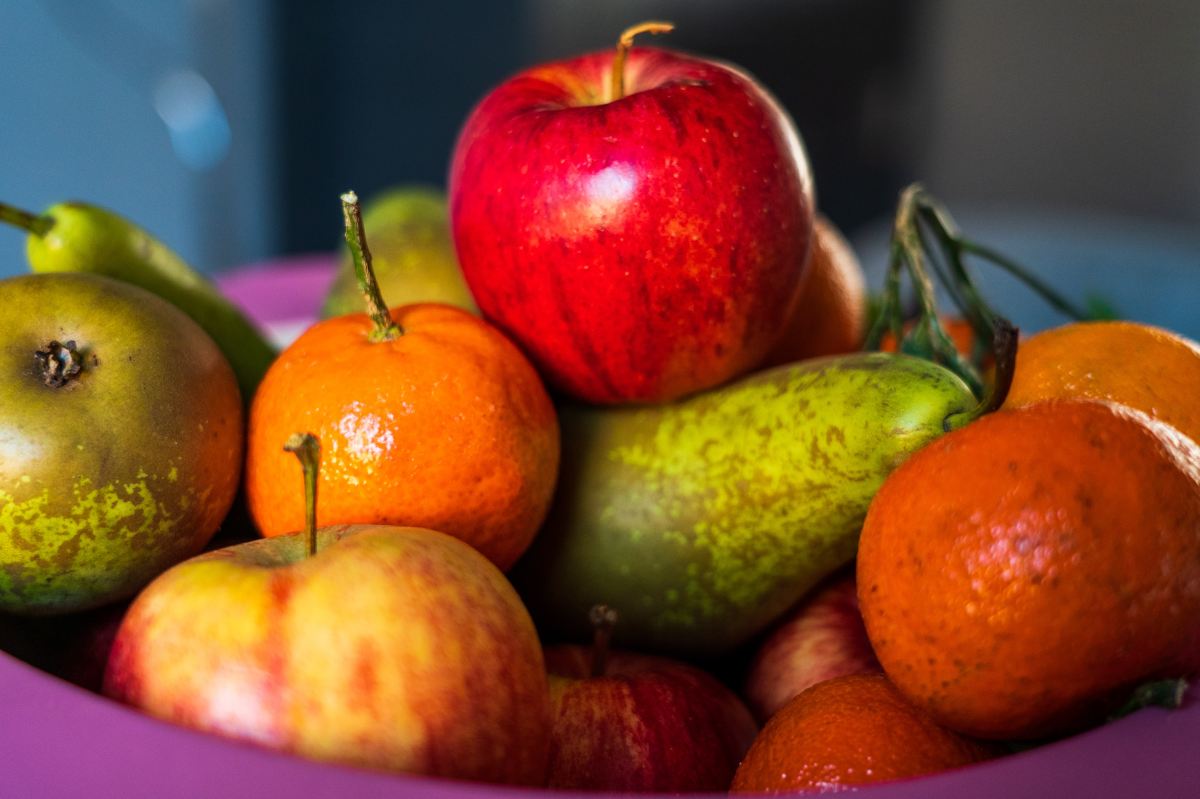
Thanks to Nick Fewings on Unsplash for the fabulous photo of fruit.

Red light’s many ways of working

Don’t discount the indirect effect of red and near infrared light.

I’ve had a number of queries lately about the importance of penetration of red and near infrared light into the brain. The questions stem from an assumption that red and near lights will only be effective if they act directly onto the cell. This assumption isn’t correct. Red light doesn’t rely on just one method to be effective.

Continue reading “Red light’s many ways of working”

Wavelengths matter

A recent article compared the action of visible red 660nm with near-infrared 980nm.

The 660nm wavelength is a very lovely and rich shade of red, very much like the red velvet in Gwen’s photo of theatre curtains. In contrast, the wavelength 980nm is way out of the visible range and our eyes cannot see it at all.

This study showed that both wavelengths stimulated the cells into action through the mitochondria, the powerhouses inside cells. When the 980nm wavelength was used, it quickly stimulated the cell, but the effect died away pretty quickly.

In contrast, the visible red 660nm was slower to get going, but the effect lasted for at least 24 hours.

What does this finding mean?

Remember that mitochondria are like batteries, powering the cell to keep it healthy and active. The longer the mitochondrial batteries remain powered up, the longer the cell will function and – very importantly – the longer it will live.

Visible red 660nm, a rich colour to our eyes, is also a rich source of energy for our cells, and the energy that this wavelength generates will last for well over a day.

There has been interest in the use of longer wavelengths (900-1100nm) for light hats. This research article strongly suggests that it would be better to stick to visible red wavelengths.

Reference:

Fuchs, Christiane, Merle Sophie Schenk, Linh Pham, Lian Cui, Richard Rox Anderson, and Joshua Tam. “Photobiomodulation Response From 660 Nm Is Different and More Durable Than That From 980 Nm.” Lasers in Surgery and Medicine 53, no. 9 (November 1, 2021): 1279–93.

Thanks to Gwen King on Unsplash for the lovely image.

Mitochondria have a social-life!

The discoveries about mitochondria continue to grow.

A while back, it became clear that many neurodegenerative diseases, especially Parkinson’s and Alzheimer’s, resulted from the cell batteries, the mitochondria, failing to properly power up the cell. This results in the cell being unable to do its job, for example making dopamine. It also results in the early death of the cell.

In 2019 came the stunning news that mitochondria are nomadic. They pop out of cells, plunge into the bloodstream and whizz around, then get out, metaphorically towel themselves dry and pop back into a different cell – possibly in a completely different part of the body.

This ability raised the question of what controls the mitochondrial migration. There must be some signalling system making this happen. One has visions of King Mito barking out orders to mitochondrial minions, who scurry around with their clipboards and spreadsheets…

The signalling system is the next big thing for scientists to understand. It offers vast opportunities for potential treatments and prevention strategies.

Now comes the news that mitochondria act like social creatures. The cosy up to each other, fuse together, split apart, and appear to communicate with each other. Absolutely fascinating!

Here’s a link to a wonderful article in Qantamagazine. It describes very beautifully the implication of a review paper by Martin Picard and Carmen Sandi, who were the first to describe this new feature of mitochondrial behaviour.

Reference:

Martin Picard, Carmen Sandi,The social nature of mitochondria: Implications for human health,
Neuroscience & Biobehavioral Reviews, Volume 120,
2021,Pages 595-610,ISSN 0149-7634,
https://doi.org/10.1016/j.neubiorev.2020.04.017.

Wavelengths

I had an interesting query today regarding the penetration of red and near infrared light into the body.

Question:

Does the penetration of red and near infrared light increase as the wavelength increases?

Answer:

Alas, no. The human body isn’t going to make life that easy for us!

Penetration studies have shown that 810 nanometres (written as 810nm) has the best ability to penetrate through the skin and into the body tissues.

There are some wavelengths in the red and near infrared spectrum that hardly penetrate at all, while others are better. 810nm is the best.

810nm is in the near infrared range. Because it is at the very edge of our ability to see, an 810nm light looks very pale.

Visible red 670nm is pretty good, but not as good as 810nm. However, when the 670nm wavelength reaches the cell, it is highly efficient at getting the cell batteries (mitochondria) to recharge and kickstart the cell.

Thanks To Steve Harvey on Unsplash for the great photo from Nottingham.