Red light definitions

Explains LLLT, Photobiomodulation and PBM.

You will have come across the various names for the use of red and near infrared lights. Michael Hamblin, one of the lead researchers in the area, has summarised the terminology changes beautifully in a recent article called (somewhat dauntingly) Mechanisms and Mitochondrial Redox Signalling in Photobiomodulation. Click here to read the full article.

Low Level Laser Therapy (LLLT)

Almost 50 years ago in Hungary, Endre Mester found by accident, that a low power red laser noticeably improved wound healing.

It was initially thought that light delivered by a laser was the key factor in the wound healing, and so the term Low Level Laser Therapy, abbreviated to LLLT, was developed.

If you put “LLLT” in your favourite search engine, you’ll find a lot of references will pop up.
Continue reading “Red light definitions”

Neuroinflammation vs Neurodegeneration

I’ve been reading an interesting 2016 review article called Cytokine networks in neuroinflammation.*

Click here for the abstract.

Some of the differences between neuroinflammation and neurodegeneration are beautifully explained. Both diagrams come from this article.

Background

Cells in our body and brain produce cytokines, small proteins that are powerful and wilful little beasties. They provide a very effective means of cell communication, and can “orchestrate complex multicellular behaviour”.

Over 300 different cytokines have been identified, but some of them have shown that in one situation they will behave in one way, but in another situation the same cytokine will do the complete opposite.

Cytokines are part of the body and brain’s response to something going wrong. But cytokines themselves can go haywire (called cytokine network dysfunction or dysregulation) and set up and maintain cascades of activity that can ultimately cause harm to the tissue.

Continue reading “Neuroinflammation vs Neurodegeneration”

Questions about red lights

I watched a lecture by Prof Michael Hamblin, of Harvard University. He is one of the most respected researchers into the use of red and near infrared light. The lecture is behind a paywall, so I can’t give a link to it, alas.

His last slide had a series of questions – things that we don’t yet know.

  1. What are the diseases and conditions that are most responsive to light?
  2. How important is it for light to penetrate into the brain?
  3. What are the effects on other parts of the body (the parts not receiving the red light)? Continue reading “Questions about red lights”

Public lectures in Melbourne – 1 July 2018

If you live close to Melbourne, you have a rare opportunity to hear two excellent lectures about the effects of red light on the head* for Parkinson’s and Alzheimer’s Disease.

Who are the speakers:

Prof John Mitrofanis, University of Sydney and Prof Liisa Laakso, Griffith University

What are they talking about:

Prof John is giving an update on case studies of people with Parkinson’s Disease using red light hats on a daily basis.

Prof Liisa is presenting recent research evidence on the effects of red light in Parkinson’s and Alzheimer’s disease.

When:

Sunday 1st July, 2018

9.00 – 9.45 am – Prof Liisa

9.45 -10.30 am – Prof John

Where:

Workshop 1 & 2,

The Larwill Studio, Art Series Hotels, 48 Flemington Road, Parkville, Vic 3052. Map

Cost:

These two lectures are free to the public, but you will need to book as numbers are limited.

Book your seat:

Email: natalie.amla@outlook.com

Background:

These two public presentations have been coordinated by the Australian Medical Laser Association, AMLA, and is part of a two day conference called Photobiomodulation Therapy.

*The official term for red light on the head is PBMt, shorthand for trans-cranial photobiomodulation.

Multi-purpose Eliza

Red light helps reduce painful joints.

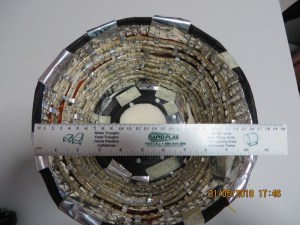
The couple who made the first light hat from the blog instructions (more) reminded me that an Eliza (or in their case, a Daffodil) is more than just an item for use on the head.

Sore knees – put your feet up on the sofa, bring your heel towards your bottom and put your foot in a place that affords a comfortable bend to your knee. Then perch the Eliza on the top of your bended knee and let the light shine around the knee. Continue reading “Multi-purpose Eliza”